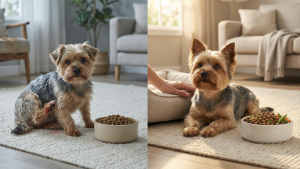
Regular brushing helps to remove dirt and distribute natural oils, promoting a shiny coat and preventing skin issues or hair mats. It can also help you detect abnormalities like lumps, infections, dry patches, and other out-of-the-ordinary stuff in the skin.
Essential Yorkie Grooming Tools
- Slicker Brush and Comb – for detangling and removing loose hair.
- pH-Balanced Dog Shampoo – maintains skin health; avoid human shampoos.
- Clippers and Scissors – for trimming hair to desired lengths.
- Nail Clippers/Grinders – to keep nails at a safe length.
- Toothbrush and Dog Toothpaste – for maintaining dental hygiene.
Ways to Groom a Yorkie
Daily Brushing
- Use a slicker brush or pin brush suitable for your dog’s coat type (e.g., fine for Yorkies, double-coated for other breeds).
- Brush gently behind the ears, under the legs, and around the neck where tangles often form.
- Start from the legs and work upward, lifting the hair in layers.
- Use short, light strokes to avoid irritating the skin or pulling on knots.
- Give treats to encourage cooperation and make grooming a positive experience.
Bathing
- Brush first to remove tangles and prevent mats from tightening when wet.
- Test with your wrist to ensure it’s not too hot or cold.
- Avoid human shampoos, which can irritate the skin.
- Soak the coat down to the skin.
- Massage shampoo in, avoiding eyes and ears.
- Any leftover shampoo can irritate.
- Use a towel or low-heat blow dryer; be sure to fully dry the coat to avoid fungus or mildew growth.
Hair Trimming
- If you are using grooming scissors, use the ones with rounded safety tips.
- Hold the hair away from the eyes and snip cautiously.
- Trim long hairs around and inside the ear flaps to allow airflow.
- Gently trim around the rear and underbelly for cleanliness.
- Trim hair between paw pads to prevent slipping or matting.
Ear Cleaning
- Avoid alcohol or hydrogen peroxide. Use a vet-approved ear cleaner.
- Gently squeeze the solution into the ear canal.
- Do this for 20–30 seconds to loosen debris. This helps expel loosened wax.
- Use a cotton ball or soft cloth (never insert cotton swabs into the ear canal).
Nail Trimming
- Choose either a dog clipper or grinder depending on what your dog is most comfortable with.
- DO NOT cut near the pink area in light nails! The pink area has flesh in it and will hurt and bleed!
- Trim bit by bit; for dark nails, go slowly to avoid hitting the pink area.
- Smooth, sharp or rough edges with a nail file or grinder.
- If you accidentally cut the pink area, use styptic powder to stop bleeding.
Dental Hygiene
- Never use human toothpaste.
- Lift the lips gently to expose the teeth.
- Focus on the outer surfaces where plaque builds up.
- If your dog is new to brushing, start with just a few teeth and build up.
- You can use dental chews or toys to supplement brushing and support oral health.
Popular Yorkie Haircuts
- Puppy Cut – Short, uniform length; easy to maintain.
- Teddy Bear Cut – Rounded face with slightly longer body hair; gives off cuddly vibes.
- Show Cut – Long, flowing coat, usually used for stage fashions; requires extensive maintenance.
- Schnauzer Cut – Short body with longer hair on legs and face; resembles a Schnauzer.
Professional Grooming vs. DIY

- Professional Grooming:
- Pros: Expertise, convenience, access to specialised equipment.
- Cons: Higher cost, scheduling required.
- Estimated Costs:
- Basic Grooming Session – $30–$90 per visit, including services like bathing, brushing, nail trimming, and ear cleaning.
- Breed-Specific Trims – $50–$150+, depending on the dog’s breed and coat complexity.
- Mobile Grooming Services – $60–$100+, offering the convenience of at-home grooming.
Additional Services:
- Nail trimming ($10–$30)
- Teeth brushing ($10–$20)
- Ear cleaning ($10–$20)
- Deshedding treatments ($20–$40)
Annual Estimate: Assuming monthly visits, costs can range from $360 to $1,200+, depending on services chosen and dog size.
- DIY Grooming:
- Pros: Cost-effective, strengthens owner-pet bond.
- Cons: Requires time, skill, and investment in tools.
- Estimated Initial Investment:
- Grooming Clippers ($30–$150)
- Brushes and Combs ($10–$50)
- Nail Clippers or Grinders ($10–$50)
- Dog-Specific Shampoo and Conditioners ($10–$30)
- Ear Cleaning Solutions ($5–$15)
- Toothbrush and Dog Toothpaste ($10–$20)
Total Initial Investment: Approximately $75–$315
Annual Estimate: After the initial investment, annual costs can be as low as $50–$100 for consumables.
Frequently Asked Questions
- How often should a Yorkie be groomed?
- Brush daily; bathe every 2-4 weeks; professional grooming every 4-6 weeks.
- Can human shampoo be used?
- No, human shampoos can disrupt a dog’s skin pH balance and cause skin diseases.
- Tips if your Yorkie dislikes grooming:
- Introduce grooming gradually, like using treats and positive reinforcement; keep sessions short and calm.
Conclusion
Regular grooming is important for your Yorkie’s health and comfort. By using appropriate tools and techniques, you can ensure your pet stays clean, healthy, and happy. Whether you choose professional services or DIY grooming, consistency is key.
For a visual guide on grooming a Yorkshire Terrier, you may find this video helpful: Grooming a Yorkshire Terrier